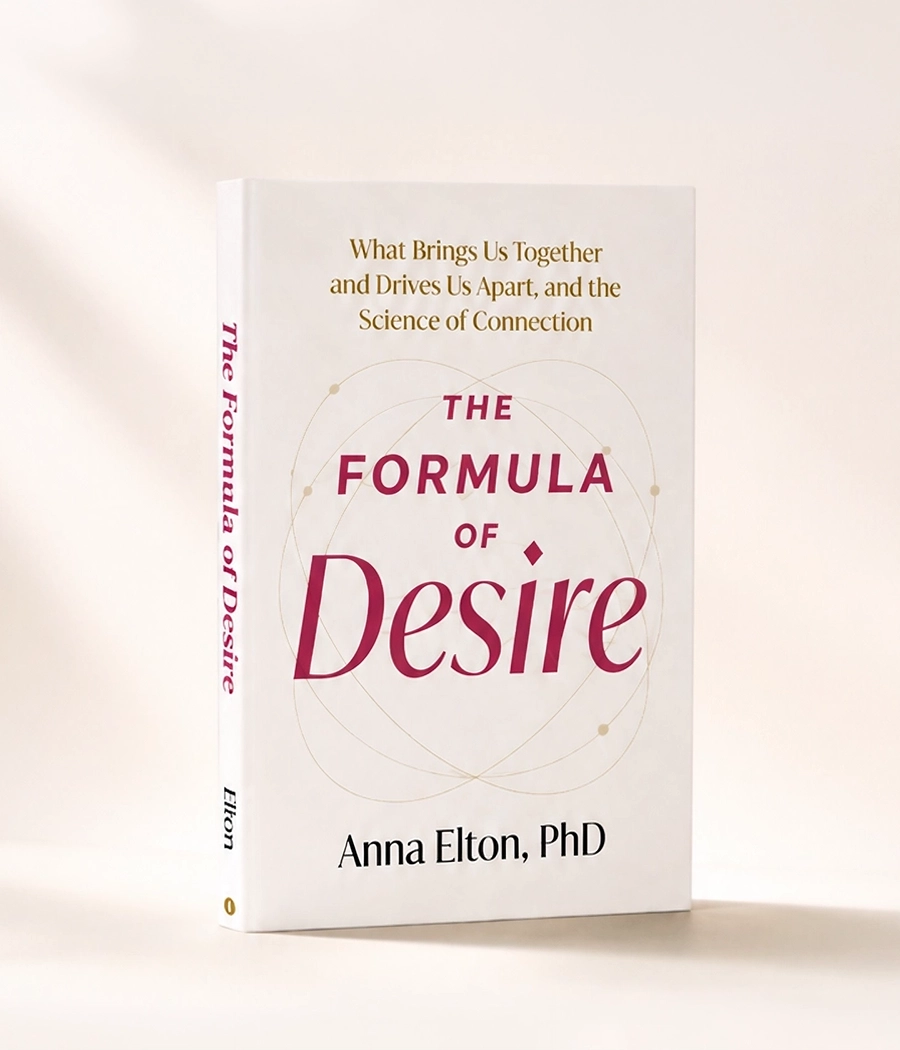
The Formula of Desire explores the science, psychology, and emotion behind connection, why attraction fades, how intimacy evolves, and what it really takes to stay close over time.
The Formula of Desire explores the science, psychology, and emotion behind connection, why attraction fades, how intimacy evolves, and what it really takes to stay close over time.
The Formula of Desire explores the science, psychology, and emotion behind connection, why attraction fades, how intimacy evolves, and what it really takes to stay close over time.
A research-based approach to understanding connection and desire.
Early Praise
“
The Formula of Desire does something rare, it explains the deeper mechanisms behind attraction and intimacy rather than just giving advice.
It’s this combination of insight and application that makes the book so effective.
Alex Korb, Ph.D.
Neuroscientist, coach, and bestselling author of The Upward Spiral: Using Neuroscience to Reverse the Course of Depression
Every couple will face questions about desire at some point, but few know how to respond to them effectively. In The Formula of Desire, Dr. Anna Elton offers a clear and practical path forward.
This is a book that couples and clinicians can return to again and again.
Barry W. McCarthy Ph.D.
Emeritus Professor of Psychology at American University
The Formula of Desire is a sophisticated, accessible roadmap for understanding how love evolves and why desire changes.
It reframes desire not as something that fades, but as something responsive and rebuildable.
Rachel Needle Psy.D.
Director, Modern Sex Therapy Institutes
Through real-life scenarios, Dr. Anna Elton brings to life how couples navigate desire, emotional distance, conflict, and the continuum of play.
Insightful and nuanced, this is a valuable resource for couples at any stage in their relationship.
James C. Wadley, PhD, LPC, CST-S
Professor, Lincoln University Editor-in-Chief, Journal of Black Sexuality and Relationships
The Formula of Desire is insightful, practical, and offers couples a powerful new way to understand and restore intimacy.
Anna Elton dismantles the myth that passion simply fades in long-term relationships.
Laurie Mintz, PhD
Licensed Psychologist and Certified Sex Therapist; Emeritus Professor, University of Florida
Author of Becoming Cliterate and A Tired Woman’s Guide to Passionate Sex
In The Media
Conversations on desire, relationships & emotional connection.
Featured across television, podcasts, magazines, and digital media.
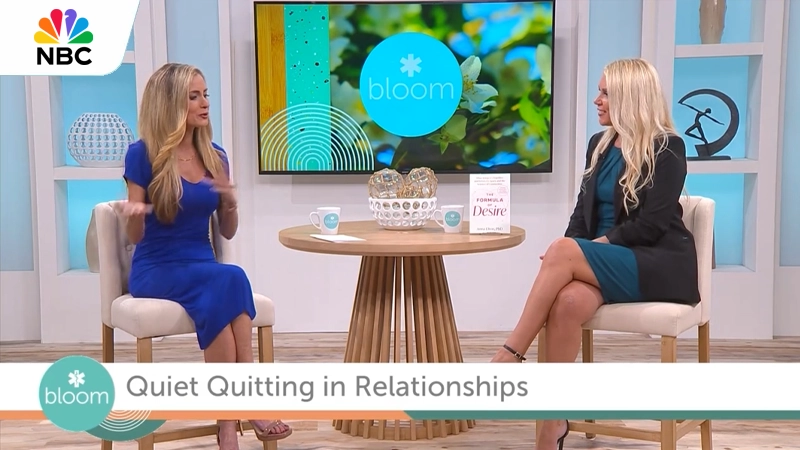
Dr. Anna Elton discusses how desire evolves throughout a relationship and why declining passion is often normal rather than a sign that partners are incompatible.
The Relational Desire Score reveals where yours stands and how connection, intimacy, and emotional safety measure up against stress, distance, and unmet needs.
Desire isn’t static. It’s a wave. It moves through phases shaped by biology, connection, life stress, and the stories we tell ourselves about our relationships.
Clinical Sexologist
Licensed Marriage and Family Therapist
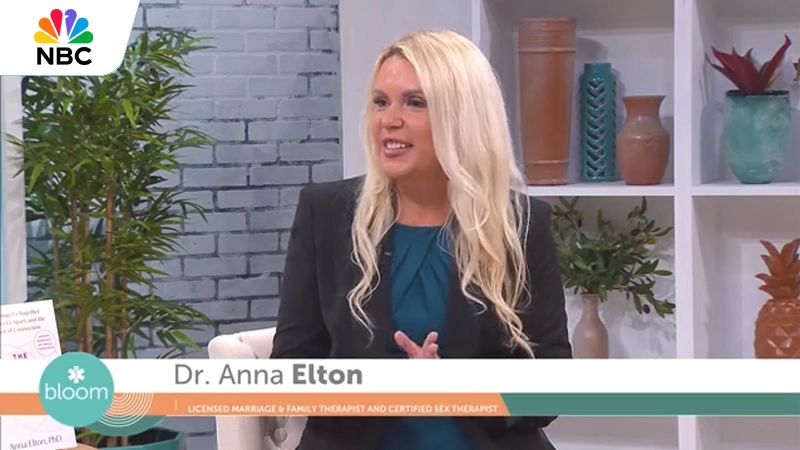
For more than a decade, Dr. Anna Elton, a clinical sexologist, marriage and family therapist, and researcher, has focused her work on why couples who once felt in love disconnect and transition into the “roommate dynamic.” Her work explores why desire changes over time, what pulls partners apart emotionally and physically, and how couples can rebuild connection, intimacy, and desire in long-term relationships.
Her work challenges the idea that fading desire is inevitable. Instead, she argues it’s predictable, and with the right tools, reversible.
You can find more on her Psychology Today blog Life, Love, Etc. and the biweekly show of the same name, where she explores love, communication, and and relationship dynamics. Anna speaks nationally and internationally on emotional well-being, and her work has been featured on PBS, ABC, NBC, and FOX
Read Anna Elton’s latest perspectives on relationships, identity, and connection. Practical psychology for understanding yourself, your partner, and your relationship.
We use cookies to analyze website traffic and improve your experience. Learn more
02 — FRAMEWORK
Wave of Desire
The question is, do you ride the wave or drift apart?
Desire isn’t static—it’s a wave that moves through phases shaped by biology, connection, life stress, and the stories we tell ourselves. Every couple rides this wave. Some fall off. Some paddle back. But the ones who thrive learn to ride it together.
Do you ride it together?
THE FIVE PHASES
– Attraction: Electric spark and butterflies
– Commitment: Steady connection and shared life
– Stagnation: When intimacy slides down the list
– Rediscovery: The turning point back up
– Re-attraction: Falling for each other again
Stagnation isn’t failure—it’s a natural phase every couple encounters. The difference is whether you notice it and choose to ride the wave back up together.
Learn to navigate all five phases in Chapter 9.
03 — FRAMEWORK
The Three Selves
Me, We, Us
Lasting intimacy requires balance across three fundamental dimensions of identity. You need space to be yourself (Me), connection as a couple (We), and belonging to something larger (Us). When any dimension is neglected, the whole system becomes unstable.
Are all three in balance?
The Three Dimensions
Me: Individual identity, autonomy, personal growth, and self-expression
We: Couple identity, shared values, partnership, and intimate connection
Us: Family bonds, community ties, legacy, and collective belonging
Many couples over-invest in “Us” at the expense of “We” and wonder why they feel less connected—or focus too much on “Me” and lose “We” entirely. Sustainable connection requires dynamic balance across all three dimensions.
This framework is explored with dedicated focus in Chapter 5.
02 — FRAMEWORK
The Relationship Shift Model
Negative. Neutral. Positive.
Relationships are not static, they shift and rarely break all at once. Over time, couples move through three emotional zones — the Positive Zone, where warmth and attraction reinforce connection; the Neutral Zone, where stability replaces intensity; and the Negative Zone, where conflict and resentment begin to dominate.
When emotional tone changes, perception changes. The same behaviors can feel supportive in one zone and irritating in another. What determines the shift is not a single argument, but the overall emotional climate.
Many couples believe they are “fine” because conflict has decreased. In reality, they may have shifted into neutrality. Sustainable connection requires awareness of the shift and intentional movement back toward positivity.
This model is explored in depth in Chapter 4.
subscribe today
Get Free
Relationship Insights
PLUS INSTANT ACCESS TO
Relational Desire Score
Erotic Currency
We respect your privacy. No spam, ever. Unsubscribe anytime.
✓
You're in!
You now have full access to both assessments. Dive in whenever you're ready.